
‘Leave the Leaves’: Local conservation-biology student’s request for you
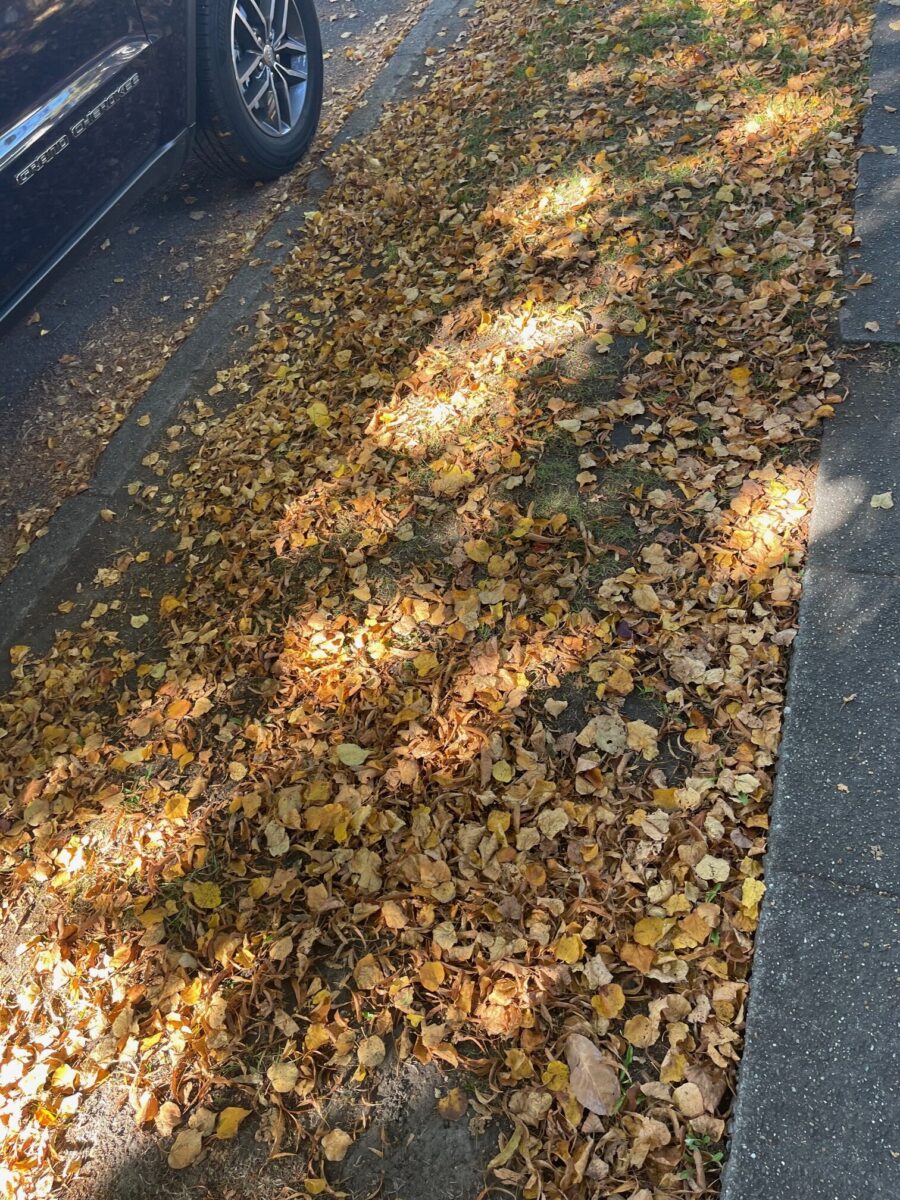
It’s fallen-leaves season. You might look at them as something to be raked up and bagged. Local masters-degree student Symone Tuleja would like you to see them, and deal with them, differently – on behalf of bees. As part of their capstone project, Symone wrote this and invited us to share it with you:
If you have a yard or outdoor space, you may choose to rake and dispose of leaves in the fall. While this encourages healthy lawns, it can remove a valuable habitat for bumblebees. Bumblebees differ from honeybees as they are very calm and gentle insects. They are also very important pollinators for flowers, fruit, and vegetable gardens. During the colder months, bumblebee queens need a safe and warm place to hibernate until spring as they may not survive through the winter. They like to hibernate in the ground and under the leaves that fall off the trees throughout the autumn season. Conservation movements such as ‘Leave the Leaves’ encourage those who own lawns to not rake their leaves in favor of creating these hibernation habitats, which may be at odds with those who want to preserve their lawns.
One way to compromise is to move the leaves to a different spot in your yard, such as a garden bed or planter, which will keep them off your grass without removing this vital hibernation habit for the bees. As a Master’s student in the Advanced Inquiry Program through Miami University, conservation is very important to me, and I am especially passionate about insects. So, I gave this method a try in October 2025 to see if it could really make a difference.
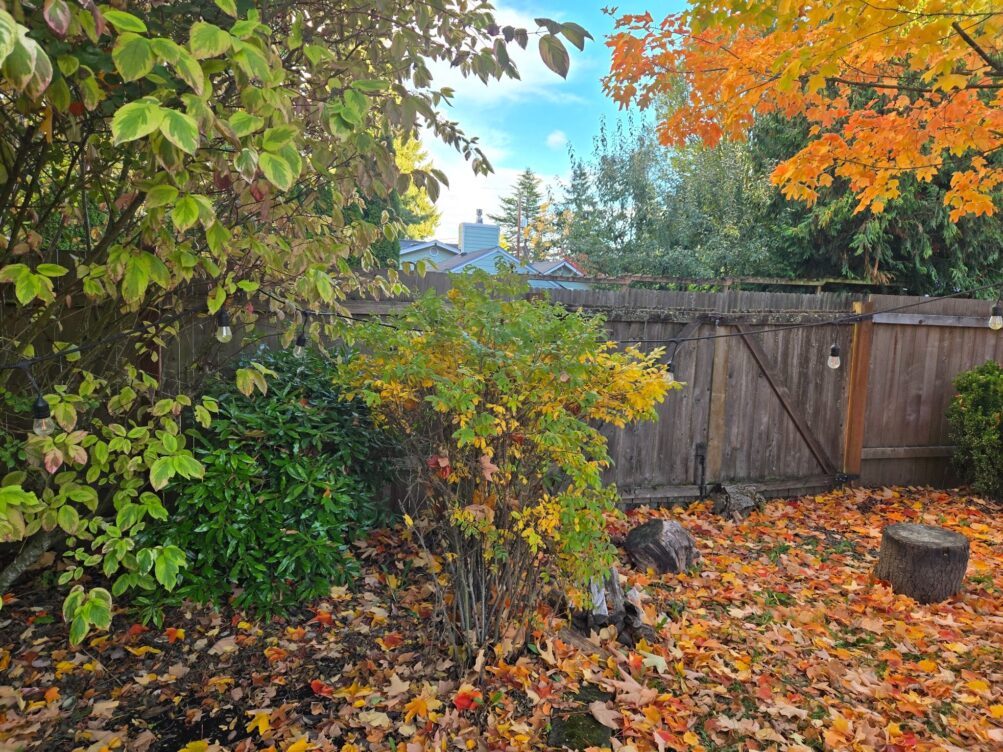
(My garden bed before adding leaves raked off of the lawn)
I started by taking the temperature of the air and the soil in the areas that I knew I wanted to put the leaves I had raked. Bumblebees need warm areas in the leaves and soil to hibernate, so I was curious whether adding leaf piles could help. These numbers would be my baseline to compare to once I was done. I then spent time raking the leaves into big piles. While it’s often viewed as a time-consuming weekend chore, I found this part easy and fun. If you have someone to jump into the leaf piles with you, raking leaves can become an engaging outdoor activity. After raking, I let my dog run through the piles a few times before moving the leaves! If you have children, invite them to explore and sort the leaves as you rake them into piles, then make sure to have fun jumping in them before relocating to your designated place in your yard. This is a great opportunity to talk to your children about bumblebees and why supporting them is important for our gardens and our ecosystems. Some ideas for inspiration include:
“Did you know that bumblebees help our flowers to grow in the spring, but they sleep under the leaves like a big blanket in the winter first? That’s why it’s important to keep some leaves for them!”
“Bumblebees are very nice insects who help our fruits and vegetables to grow. It’s important that humans do what we can to support them. We can do that now by leaving some leaves for them to sleep in during the colder months.”
“Bumblebees like to keep warm in the winter just like we do. One way they do that is to hibernate in the ground underneath piles of leaves for warmth and protection. We can support them by keeping leaves in our yard until spring when they wake up and begin pollinating our garden.”
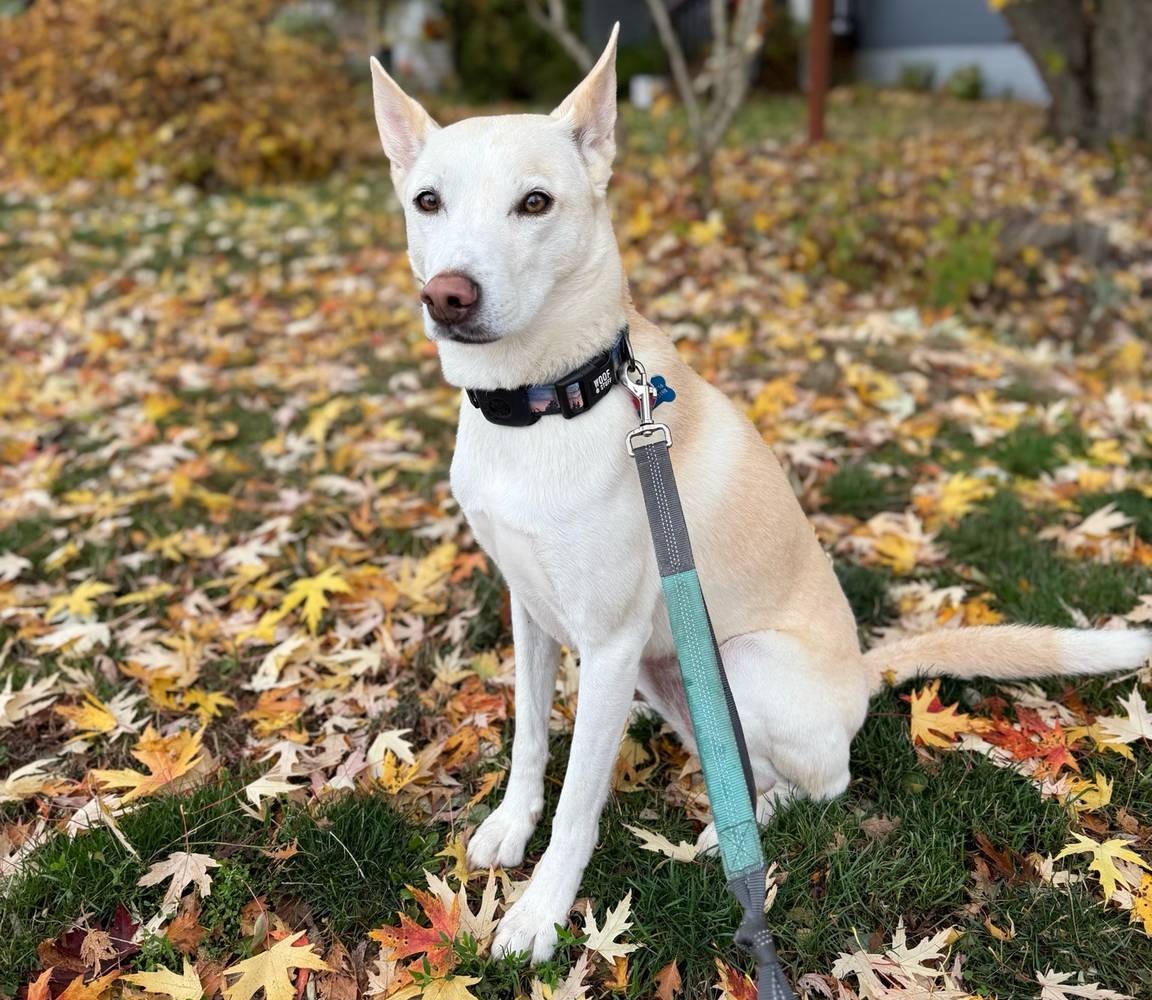
(My dog Willow enjoying the autumnal foliage)
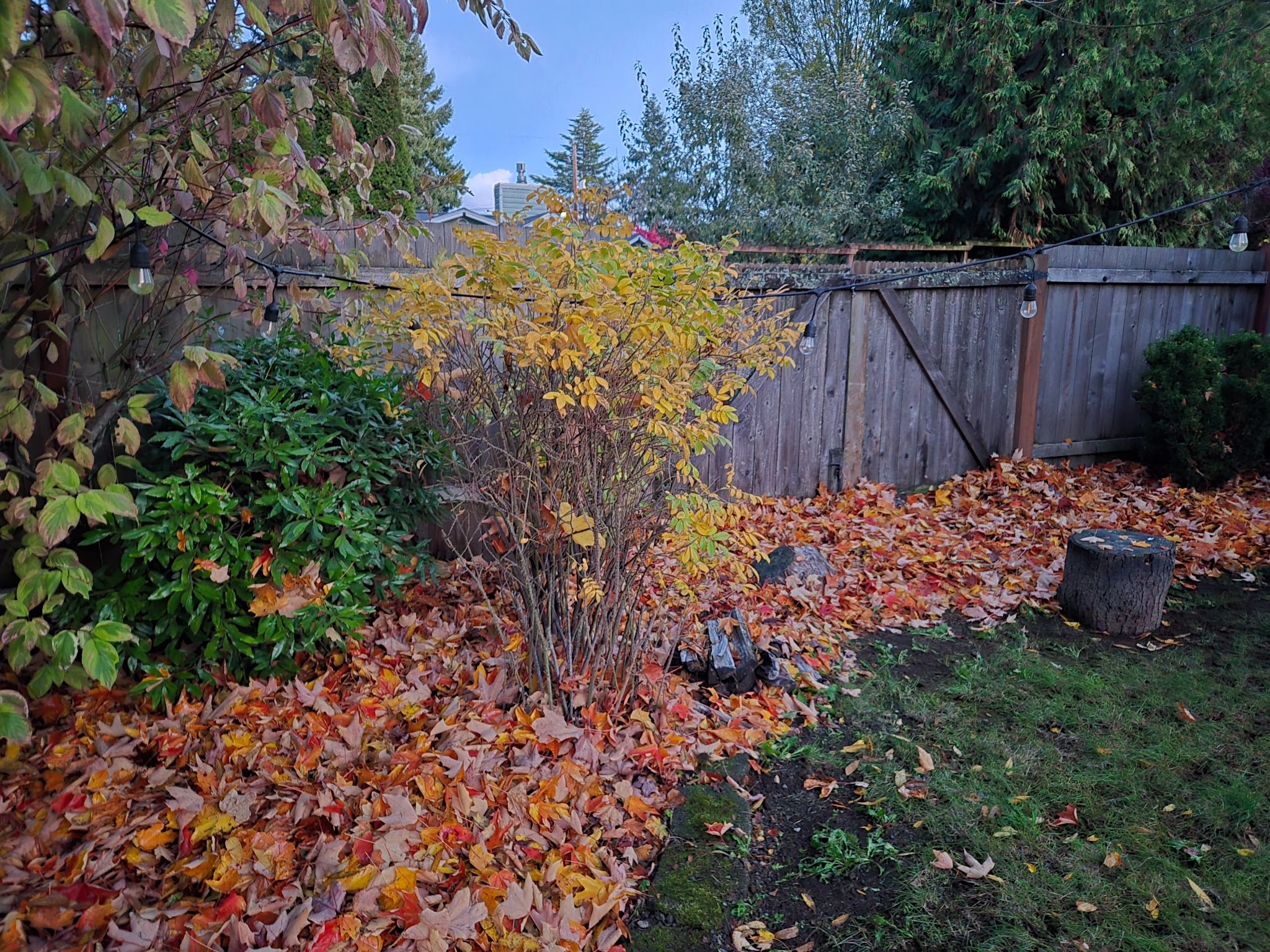
After raking my backyard and moving the leaf piles to easy-to-access garden beds around the edge of my yard, I measured how deep the leaves were, and once again took the temperature of the air and the soil. I found that on average, the areas with more leaf coverage had warmer soil temperatures compared to before I added the leaves. This means that keeping leaves in your yard, even if not on the grass, ensures that there are warm and cozy hibernation habitats for bumblebees!
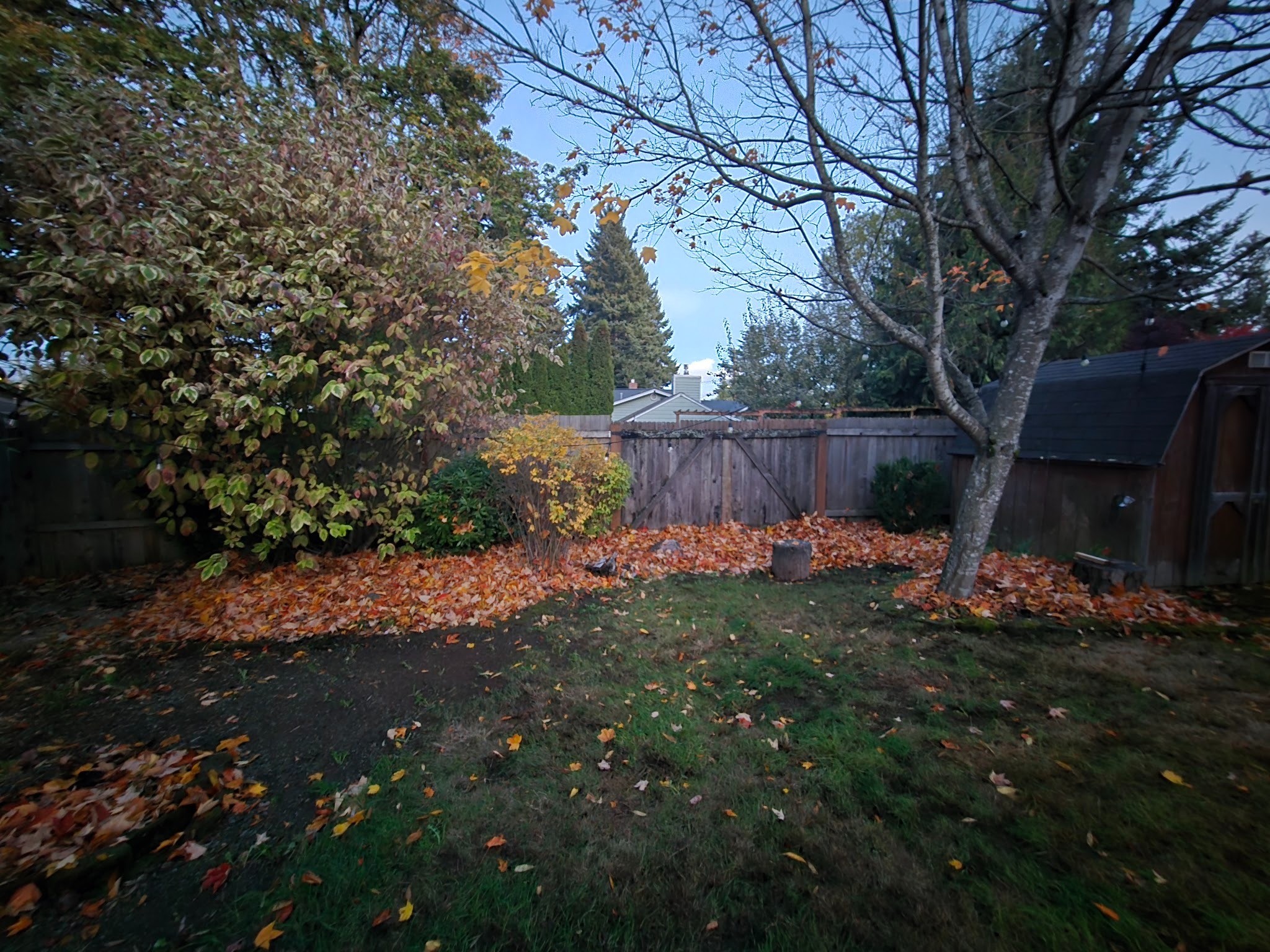
(My garden bed after adding leaves raked off of the lawn)
(My garden bed after adding leaves raked off of the lawn, close-up)
Moving your leaf piles to your planters or garden beds may sound like extra work, but it’s no different from putting your leaves in your yard waste bin for compost. I know I was surprised to find it was easier than I expected before starting, so I encourage you to try it out this fall! Even moving just some of your leaves to create a warmer, safer hibernation habitat for bumblebee queens will mean we see more of our busy buzzers the following spring.
Here are more places to explore ‘Leave the Leaves’:
From our beloved local nursery, this page dives more into why you should leave the leaves. It makes a great case for the movement, although it doesn’t cover relocating the leaves to new areas of your yard. Luckily, all the benefits of leaving the leaves still apply if you relocate your leaf piles off of your grass to other areas of your yard or garden!
From a well-known nonprofit focused on invertebrate conservation, this page is a reliable source of tips and information on how to support insects by leaving the leaves. There are even more resources linked at the bottom of the article, so definitely check those out!


No comments